
Also known as Ayers Rock, the magnificent Uluru is more than just a landmark; it’s a geologic formation that is shrouded in secrets and ancient history. Situated in the heart of Central Australia, within the Uluru-Kata Tjuta National Park, this colossal sandstone monolith has fascinated geologists, tourists, and Aboriginal people alike for decades. In order to appreciate the beauty that Uluru emanates, it is important to analyze its developing processes, which include various forms of ancient rocks, sediments, and erosion that have taken millions of years.
The Geological Significance of Uluru
The Origins of Uluru: A Journey Through Time

It is an intriguing story of how the unique structure of Uluru came about that goes as far back as the beginning of the movement of the tectonic plates. This monolith measures 348 m in height with a circumference of 9.4 km and is made primarily of refined sandstone, a type of sedimentary rock that has mouldered over a long period of years. The history of Uluru begins approximately 600 million years ago in the Late Precambrian which is the geological period. The region in those days was underwater being shallow allowing for deposition of layers. These layers were rich in minerals and organics and were slowly transformed into a sedimentary rock.
Sedimentary Rock Formation and Composition
The only environmental conditions Uluru sandstone forms under are air and deserts. Sedimentary rock Its impregnated particles consist of sands of limited sizes which when classified belong to grains of the average 0.06 mm to 2mm. This sedimentary rock is also famous for its bright red color that’s due to iron oxide or rust which covers the sands.
The iron oxide gives Uluru its iconic hue, which changes during the day due to solar illumination. ‘Such climatic dissimilarities have shocked geologist since they am not commonplace at Uluru’s geographical disposition. For swells investigate could present doesn’t go that depth into the consistency of course. Woods can explain the correct physiological conditions for the consolidation of sediments.
Key Characteristics of Sandstone
The origin of the main framework components of sandstones may vary from modern marine sands to coarse and fine crust rocks.
Grain Size: Sandstone consists of sand-sized particles, typically between 0.0625 and 2 millimetres in diameter.
Cementing Material: The particles are bound together by minerals such as silica, calcium carbonate, or iron oxide.
Processes Leading to Formation of Sandstone
Erosion and Transport: Sand particles are excavate from older rocks and moved by wind or water.
Deposition: The most logical place for the particles to settle is in sedimentary environments whether in river beds, deserts, or in the sea.
Erosional Features and Differential Weathering

Erosional features of the Uluru are perhaps the most remarkable along its landscape largely because its surface has undergone millions of years of erosion and weathering. The monolith has features suggestive of water sapping wherein concave, down features are formed due to the carving of the rock out by water and these form through degrades. Elements of the rocky structure of the monolith have undergone weathering due to differential weathering in that some areas of the rock have weathered faster than others due to variation in rock composition and structural methods.
Factors that affect the process of erosion in Uluru
Sub–surface Weathering: Weathering below the surface can weaken the rock and lead to the formation of cracks and fissures on the rock.
Erosion Lines: Outward features like landscaping patterns of Uluru’s surface highlight zones of erosion that have taken place in the past.
Period of Erosion: The time taken in the periods when erosion takes place determines the present morphology of Uluru, its features, and its shape.
The Role of Erosion and Weathering in Shaping Uluru

There is virtually no doubt that Uluru was formed by the great power of nature. Today one must note that the amount of material eroded from this monolith over millions of years is huge literally and it is estimated that many kilometers of material have been removed by many ways. One of the contributing factors for these unique shapes of Uluru is erosion that has brought about Uluru as one of the geological features in the landscape.
Erosion features on the surface of Uluru tell the story of the various processes which took place within the surfaces in time past. These lines are skeletons of ancient flows of water, glaciers and streams seeking to erode away the rock and soil. The impact of erosion on Uluru is a reminder of the ongoing forces that continue to shape our planet’s landscapes.
Intersection of Two Main Contexts: Culture and Geology

Geological and cultural factors explain the history of Uluru’s formation. For the Aboriginal people, namely, the Anangu people, Uluru is not merely a big rock; it is of great cultural significance and holds profound spiritual values. The rock’s formation as well as its geological factors are part of Dreamtime stories and traditional practices about the rock.
The intersection of geology and culture at Uluru highlights the importance of preserving this natural wonder. Every feasible activity towards achieving such goal is exercised and one of these authorities is known as Parks Australia which is the management of Uluru-Kata Tjuta National Park and aims at maintaining Uluru both natural and cultural sites with the pressure of tourists and scientists.
The Broader Geological Context of Uluru

As a natural rock formation, Uluru is also part of a larger rock outcrop incorporating other such notable features found in Australia. Mount Augustus in the state of Western Australia, for instance, is a grandiose monolith that deservedly gets attention just like Uluru as it has geology to match its enormity. Other geographical regions like Zion National Park and South Australia also have similar geographical formations Steamboat Rock and Fort Rock respectively, which further explain how Uluru was formed.
Uluru is instead remarkable in internal rather than external characteristics and history within the wider range of geological forms. The study of Uluru’s geology contributes to our understanding of sedimentary rock formations and the processes that shape the Earth’s surface.
The Mystique of Uluru’s Rock Art
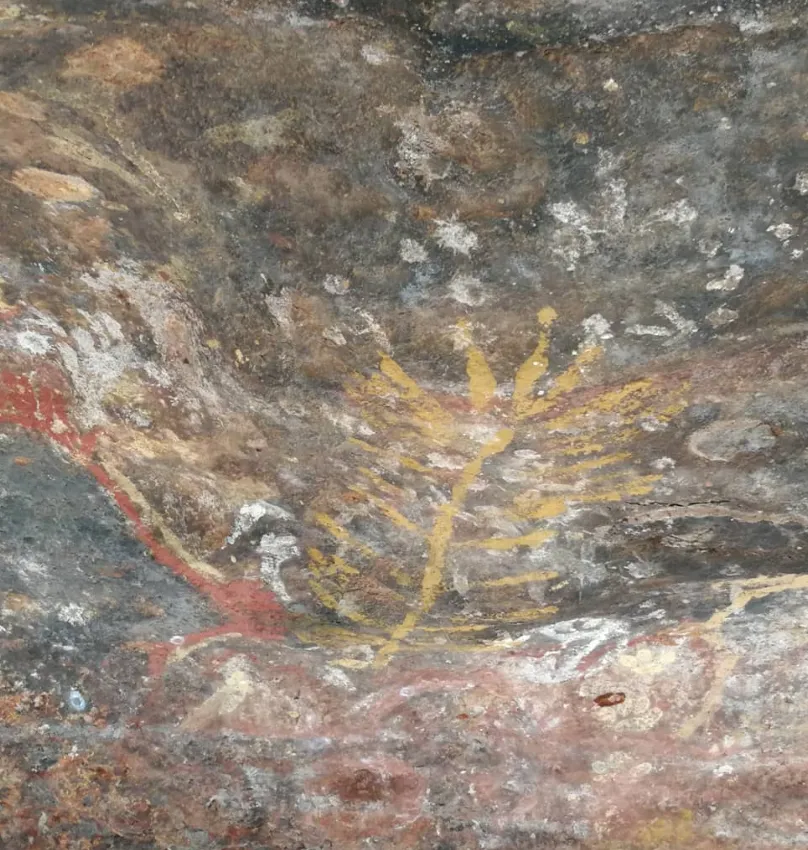
In addition to its geological significance, Uluru is renowned for its rock art, which provides insight into the artistic and cultural practices of the Aboriginal people. There are also similar artworks on its surface that are rock art and depict various forms made over years of activity. These art pieces are evidence of the culture of Indigenous societies and their affiliation with the environment.
The protection of rock art is highly regarded considering the significance of Uluru’s cultural heritage. Generally an attempt is made to shield these ancient pictures against all possible damage whilst letting people benefit from their historical and cultural significance.
Conclusion
Uluru or Ayer’s Rock is a geological phenomenon that has a very fascinating history spanning over millions of years. A study of its composition suggests that it is the final outcome of a series of sedimentation processes, tectonism and erosion.
Beyond its geological significance, Uluru holds profound cultural importance for the Aboriginal people, serving as a sacred site deeply embedded in their traditions and lore. The preservation of Uluru’s natural and cultural heritage is a shared responsibility that highlights the need to respect and protect this iconic landmark for future generations.
FAQ
What’s the age of Uluru?
Uluru is approximately 600 million years old. It was formed during the Late Precambrian period when the area was covered by a shallow sea.
From what materials is Uluru made?
Uluru is mostly made from sandstone, which is a type of sedimentary rock that consists of particles of sand fused together through lithification processes over millions of years.
Why does Uluru change colour?
The colour of Uluru depends on the time of day because of the sun’s position. Depending on the composition of iron oxide of sandstone, light is refracted into red, orange or purple.
Can I go on tour to Uluru?
Yes,there are many types of Uluru tours to choose from! These tours offer different experiences, such as guided walks, cultural insights into the Aboriginal significance of Uluru, and helicopter rides.
How is Uluru protected?
Management of Uluru is an area under the Parks Australia administration and is included in the Uluru-Kata Tjuta National Park. The purpose of the management of the park is to control the natural and cultural values of the site, including Uluru, and the usage of the park by tourists and studies.